Pool Resurfacing in Venice: Finishes, Costs & Complete Guide
Thinking about pool resurfacing in Venice, FL? This guide compares plaster, quartz, and pebble finishes for Florida's climate, detailing costs and lifespans.
Pool Resurfacing in Venice, FL: Finishes, Costs & Complete Guide
Pool resurfacing in Venice isn't just about aesthetics—it's about durability. Your pool sits under relentless Florida sun, exposed to year-round use, hard water minerals, and chemical stress. The finish you select today directly impacts your maintenance burden, water clarity, and budget for the next decade. Standard plaster might save you $6,000 upfront, but pebble finishes last 15–25 years versus 7–12 years for plaster. This guide walks you through material options, real Venice-area costs, the full resurfacing process, and what happens after the pool refills. By the end, you'll know exactly which finish makes sense for your home and budget.
Three Questions Every Venice Homeowner Asks Before Resurfacing
- How much does pool resurfacing actually cost in Venice, and what drives the price difference between finishes?
- Which finish holds up best under Florida's UV exposure and hard water without constant chemical maintenance?
- What's the complete resurfacing timeline, and what happens during the critical 28-day startup period after refilling?
Key Findings: What You Need to Know at a Glance
- Pool resurfacing in Venice costs $6,000–$20,000 depending on finish selection; pebble and quartz finishes command a 45–60% premium over plaster but last more than twice as long.
- Standard plaster lasts 7–12 years in Florida's climate; quartz finishes last 12–18 years; premium pebble finishes last 15–25 years—making durability the true cost driver.
- The full resurfacing process takes 5–10 working days, but a critical 28-day startup chemistry period after refilling requires careful water balancing to prevent staining and surface degradation.
- Travertine and natural stone coping ($35–$60+ per linear foot installed) paired with porcelain waterline tile creates a cohesive, luxury look that complements any interior finish.
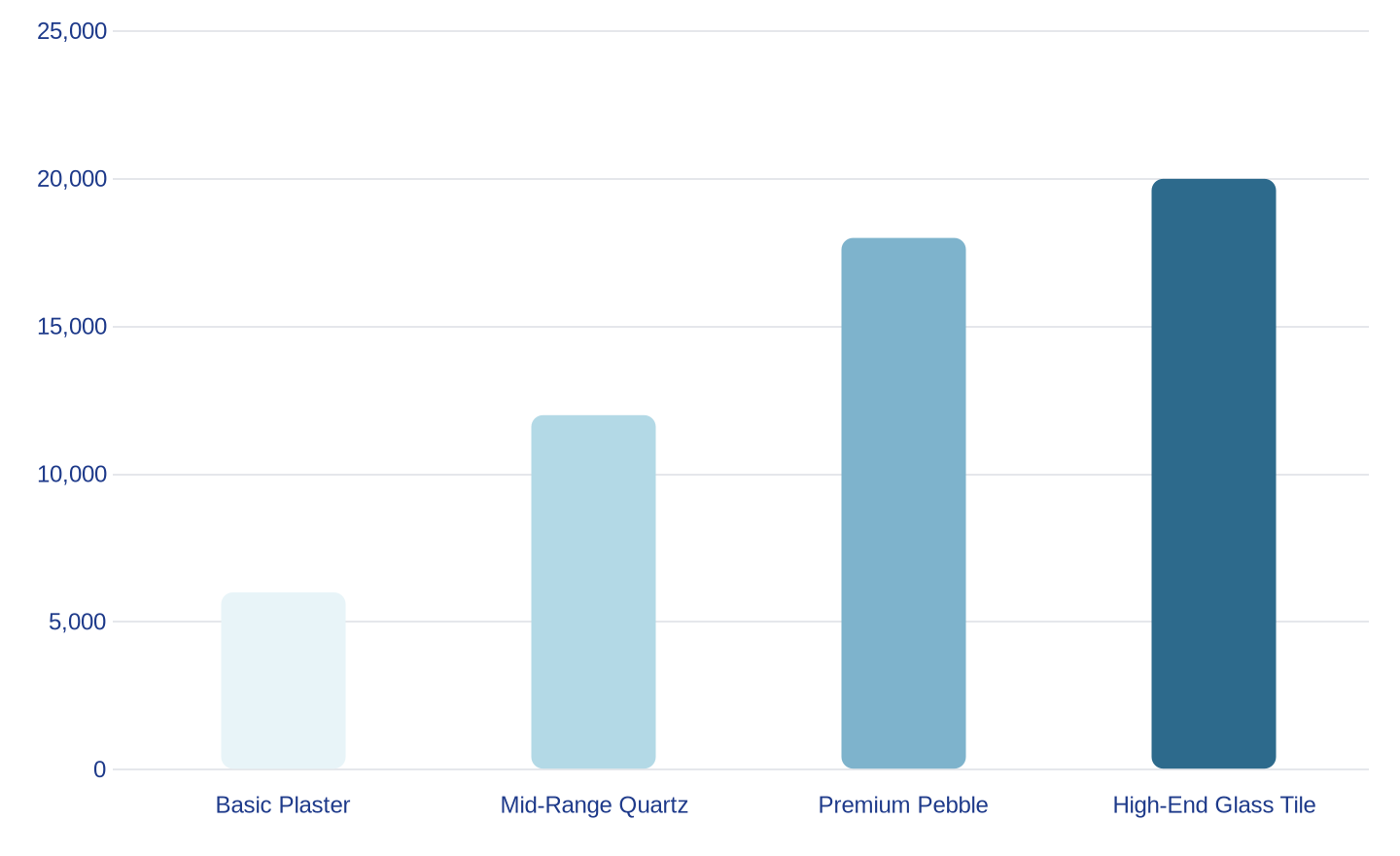
Pool resurfacing costs in Venice scale with finish durability: basic plaster starts at $6,000, while premium pebble and glass tile finishes exceed $18,000–$20,000. Mid-range quartz offers the best balance for most homeowners.
How We Researched This Guide
This guide synthesizes research specific to Southwest Florida's climate, material performance data from leading pool resurfacing manufacturers (PebbleTec, Diamond Brite, Pebble Sheen), and regional pricing from Sarasota and Venice pool contractors. We've cross-referenced lifespan claims against real-world Florida conditions—constant UV exposure, year-round pool use, high mineral content in local water—and prioritized cost-longevity trade-offs that matter most to homeowners making five-figure investment decisions. All figures reflect 2024–2025 market rates for the Venice, Sarasota, and Bradenton area.
1. Pool Resurfacing in Venice: Cost, Finish Choices & What Drives the Price
When you start pricing pool resurfacing in Venice, quotes will cluster into roughly four tiers: basic plaster, mid-range quartz, premium pebble, and luxury glass tile. Each tier includes surface draining, acid washing, gunite inspection, finish application, and refilling—but what separates a $6,000 quote from an $18,000 quote is almost entirely the material layered onto that prepped shell, not the labor steps themselves.
Pool size matters less than most homeowners assume. A 400-square-foot pool resurfaced in plaster and the same pool resurfaced in pebble require nearly identical labor hours—draining, prep, and application scale with square footage, but the material cost per square foot is what swings the final number. This is why two neighbors with similarly sized pools can report wildly different invoices: one chose Diamond Brite plaster, the other chose PebbleTec.
Many Venice homeowners land on mid-range quartz instead of basic plaster once they understand the math. Quartz costs more upfront, but it resists staining better and holds up longer under the same sun and water conditions that chew through plaster within a decade. For a homeowner planning to stay in the home 12+ years, quartz often pencils out as the smarter spend rather than the "safe" budget choice.
Hidden costs catch people off guard. Waterline tile replacement, coping repair or replacement, and local permit fees aren't always itemized clearly in an initial verbal estimate—always ask your contractor to break these out separately. If you're also evaluating structural questions about your shell, it helps to understand the underlying pool construction process so you can tell the difference between a legitimate gunite repair recommendation and an unnecessary upsell.
Most reputable contractors in the Venice and Sarasota market work on a draw schedule: a deposit to secure your spot on the calendar, a payment once the pool is drained and prepped, and a final payment upon completion and refill. Some contractors offer financing partnerships for projects over $10,000—worth asking about if you're weighing pebble against plaster and the price gap is what's holding you back.
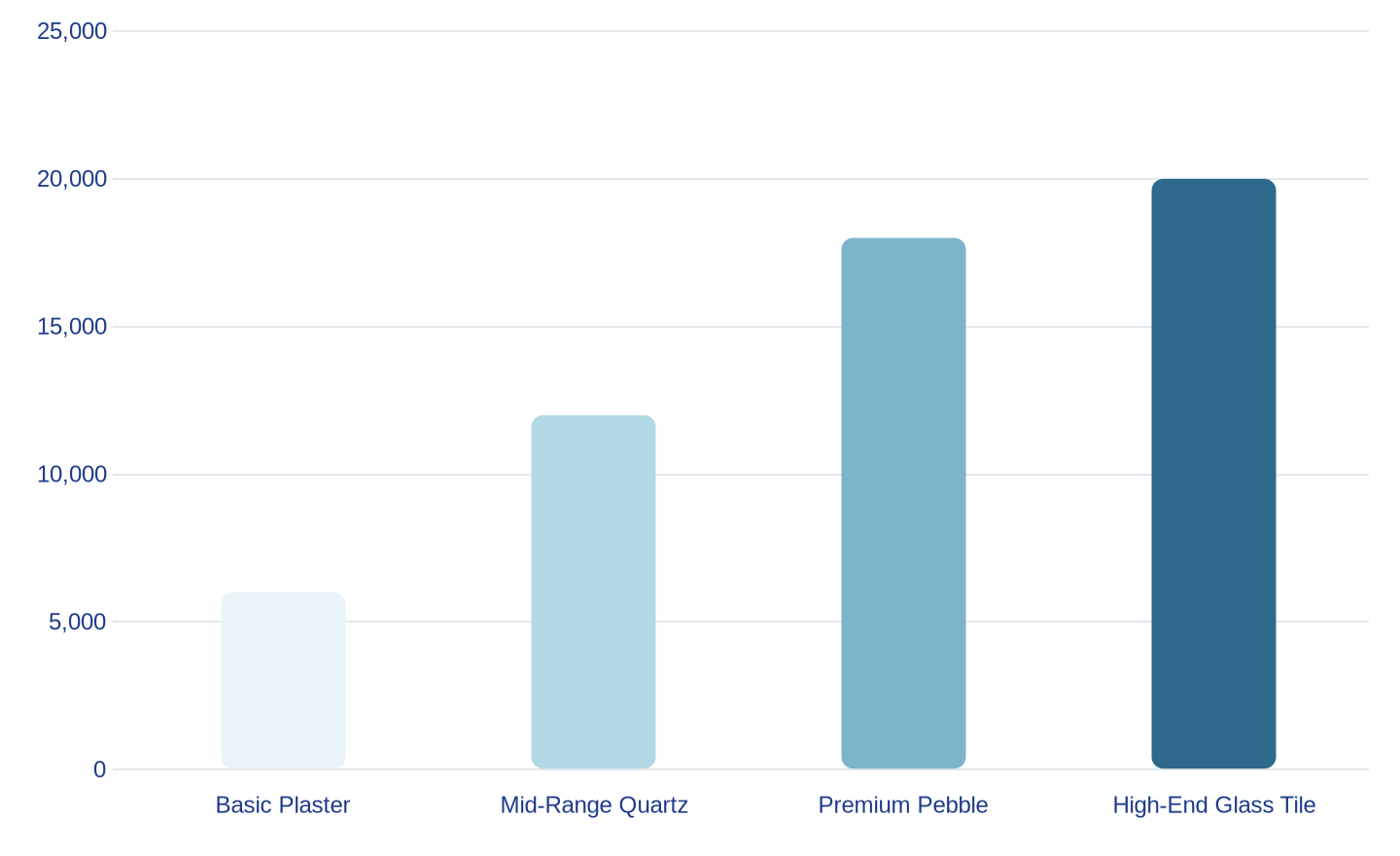
Resurfacing costs in Venice vary dramatically by finish type. Basic plaster is the entry point; each upgrade tier adds durability and longevity, justifying the higher upfront spend over 15–25 year ownership.
- Basic plaster: $6,000–$8,000; entry-level choice; requires 7–12 years of maintenance before next resurfacing.
- Quartz aggregate: $11,000–$14,000; balanced choice; 12–18 year lifespan with improved stain resistance.
- Pebble aggregate: $15,000–$20,000; premium option; 15–25 year durability; 45–60% cost premium justified by longevity.
- Glass tile: $18,000–$22,000+; luxury finish; requires meticulous grout maintenance in Florida's hard-water conditions.
try this: Pruébalo tú mismo: Get itemized quotes from 2–3 local Venice contractors specifying material brand, finish type, warranty, and timeline. Use the cost comparison table above to estimate where your project falls on the $6,000–$20,000 spectrum.
2. Pebble vs. Quartz vs. Plaster: Which Pool Finish Lasts Longest in Florida's Climate?
Florida doesn't treat pool finishes gently. The combination of near-constant UV exposure, mineral-heavy municipal and well water, and pools that stay open and in use twelve months a year accelerates wear in ways that cooler-climate pools simply never experience. A finish rated for 10–15 years in a northern market can underperform that estimate in Venice if it's not engineered for this specific stress load.
Choosing a pool finish in this climate is a lot like choosing paint for a car that lives outdoors year-round in the sun. The cheapest option looks fine on day one but oxidizes and needs frequent touch-ups. Mid-range finishes are like a decent ceramic coat—they hold up noticeably longer with minimal fuss. Premium pebble finishes are like a ceramic pro coating: higher upfront cost, but you're essentially protected for two lifecycles of the cheaper option. Glass tile is the full custom paint job—stunning initially, but it demands meticulous upkeep in a humid, mineral-rich environment.
Standard Plaster: The Breakdown Timeline
Plaster develops visible staining within 3–5 years in Venice due to hard water minerals and UV exposure. Acid washing extends its usable life, but each wash strips a thin layer of material, which is exactly why plaster rarely makes it past the 7–12 year window before it needs replacing again.
Quartz Pool Finish Florida: The Balanced Option
A quartz pool finish in Florida resists staining better than plaster and tolerates less aggressive acid washing over its life, which stretches its effective lifespan by roughly 5–6 years compared to standard plaster. For homeowners who want meaningfully better performance without stepping all the way up to pebble pricing, quartz is usually the sweet spot.
Pebble Pool Finish Florida: Built for the Long Haul
A pebble pool finish built for Florida conditions uses UV-stabilized resins and hard aggregate that resist both chemical etching and mineral staining far better than plaster or quartz. This is the finish that genuinely delivers on 15–25 years of service life rather than requiring an early resurfacing surprise.
One Venice homeowner with a 400-square-foot pool chose pebble resurfacing instead of replastering. The upfront cost was $18,000, compared to roughly $7,000 for plaster—but the pebble finish will last around 20 years instead of 10. Over two decades, that choice saves an estimated $11,000 in labor and materials for a second resurfacing project, despite the higher initial price. Her maintenance burden—brushing, acid washing—also dropped by about 60%, because pebble resists hard-water staining far better than plaster ever could.
Glass Tile: Beautiful, But Demanding
Glass tile creates visual luxury that plaster and even pebble can't match, but the grout between the tiles is vulnerable to hard-water staining and mildew in Florida's humidity. Professional resealing every 2–3 years isn't optional if you want the finish to stay looking the way it did on installation day.
| Finish Type | Minimum Lifespan (years) | Maximum Lifespan (years) | Florida Climate Factor |
|---|---|---|---|
| Standard Plaster | 7 | 12 | High UV/hard water degradation |
| Quartz Aggregate | 12 | 18 | Enhanced UV resistance |
| Pebble Aggregate | 15 | 25 | Superior durability |
In Florida's intense UV and hard-water environment, pebble finishes outlast plaster by more than double, making them the most cost-effective long-term choice despite higher upfront investment.
- Standard plaster develops visible staining within 3–5 years in Venice due to hard water minerals and UV exposure; acid washing extends life but stresses the plaster surface.
- Quartz finishes resist staining better than plaster and require less aggressive acid washing, extending their effective lifespan by 5–6 years.
- Pebble finishes are engineered with UV-stabilized resins and hard aggregate; they resist both chemical etching and mineral staining far better than plaster or quartz.
- Glass tile creates visual luxury but the grout between tiles is vulnerable to hard-water staining and mildew in Florida's humidity; professional resealing every 2–3 years is essential.
sidenote: Nota: Hard water minerals in Venice's municipal water supply (and any well water used to refill pools) create calcium deposits that visibly etch plaster within 3–5 years. Quartz and pebble finishes resist this etching far better. If you have a water softener at home, ask your contractor about softening the refill water—it's an extra expense but dramatically extends finish life.
3. The Complete Pool Resurfacing Process: From Draining to the Critical 28-Day Startup
Resurfacing follows a predictable sequence, and understanding each step helps you spot a rushed job before it becomes your problem. In Venice specifically, the region's clay-based soil makes proper draining technique important—draining too fast or leaving a pool empty too long can create structural stress on the shell.
After draining (typically 12–24 hours depending on pool size and pump capacity), the crew moves into surface prep and acid washing, which strips the old finish down to exposed gunite. This is also when a thorough contractor inspects for cracks, thin spots, or structural issues—repairs here add time and cost, but skipping this step is how homeowners end up with premature finish failure a few years later.
Once the gunite is confirmed sound, the new finish—plaster, quartz, or pebble—gets applied, with each coat typically requiring 24–48 hours to cure before the next step. Then comes refilling, which starts the clock on the part of the process most homeowners underestimate: the 28-day startup chemistry period.
This isn't promotional padding from your contractor. It's the time your finish genuinely needs to cure properly while water chemistry stabilizes. Rushing into heavy pool parties, large bather loads, or intense sun exposure before day 28 risks algae blooms, calcium scaling, and surface etching—essentially undermining the investment you just made before it's had a chance to set.
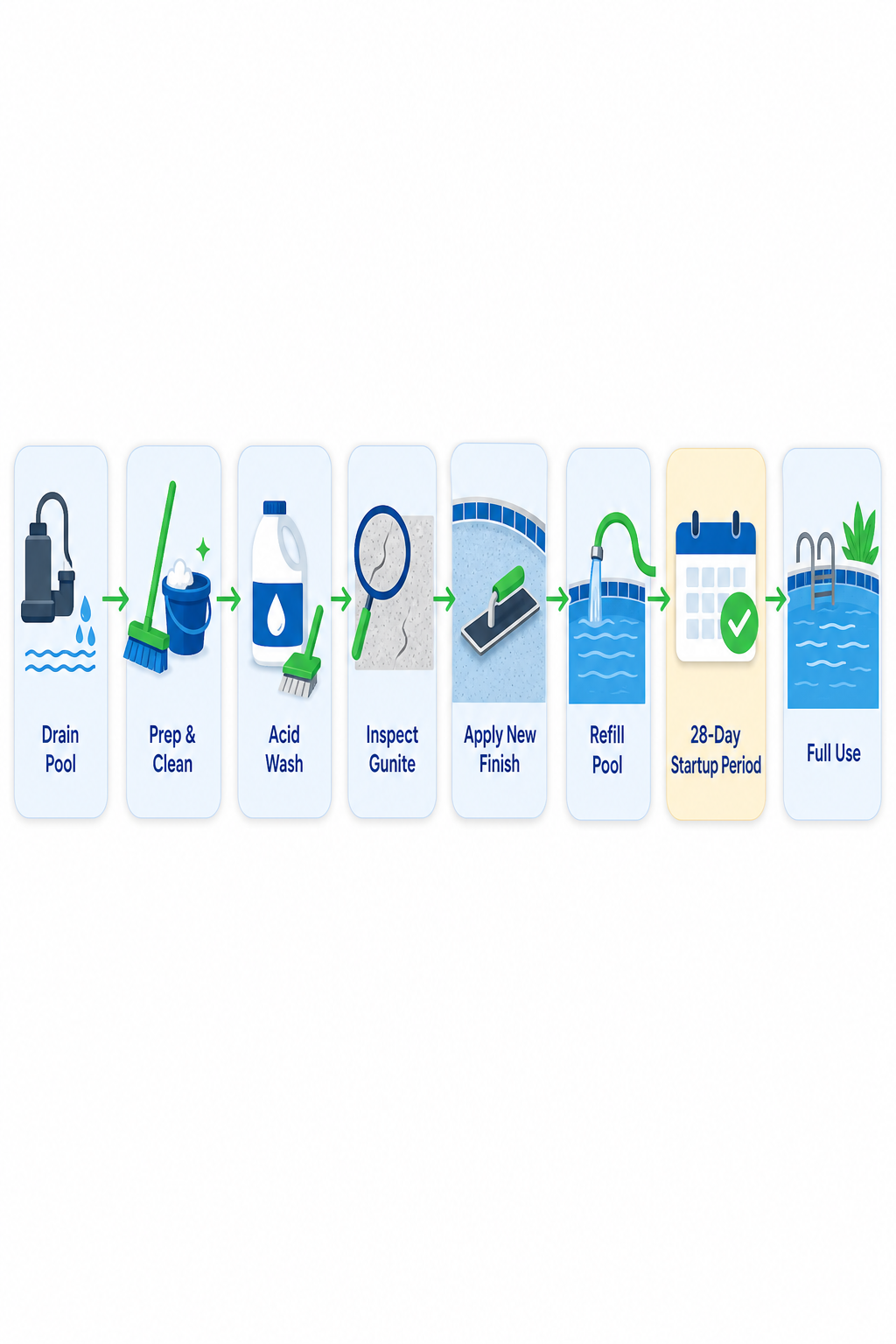
Pool resurfacing follows a precise 8-step timeline. The 28-day startup chemistry period (highlighted) is non-negotiable for finish longevity; rushing this phase risks staining, surface damage, and premature degradation.
- Total project duration: 5–10 working days for resurfacing itself; add 28 days minimum before full pool use.
- Weather delays are common in Florida; rain can pause work for 1–3 days and extend timelines.
- Draining your pool can take 12–24 hours depending on size and pump capacity; plan for contractor equipment setup.
- The 28-day startup is not promotional padding—it's the time required for finish curing and water chemistry stabilization. Rushing into heavy use risks algae blooms, calcium scaling, and finish etching.
try this: Pruébalo tú mismo: Ask your contractor for a detailed 28-day startup chemistry protocol—include weekly water tests, target pH/alkalinity ranges, and when brushing, running the pump 24/7, and adding calcium are appropriate. Document this in writing before resurfacing starts.
4. Waterline Tile and Coping Materials: Pairing Finishes for a Luxury, Cohesive Look
Waterline tile sits right at the water's surface, and it does more than look sharp—it protects the finish edge from the concentrated chemical and mineral stress that happens right at the waterline where evaporation leaves deposits behind. Skip it or cheap out here, and you'll see staining right where it's most visible.
Among waterline tile options, porcelain outperforms ceramic in Florida's hard-water environment. It's more stain-resistant, won't absorb minerals the way ceramic can, and comes in enough color and texture options to match any interior finish, from classic plaster blue to a dark pebble aggregate.
Pool Coping Materials Florida Homeowners Choose Most
For pool coping materials in Florida, travertine remains the most popular choice for good reason: it stays naturally cooler underfoot in Venice's summer sun, offers natural slip resistance when honed, and pairs well with nearly every interior finish. Natural stone options like granite and limestone sit at the premium end, delivering a more dramatic look that complements pebble finishes especially well.
If your coping is cracked, discolored, or simply dated, resurfacing is the ideal time to replace it. Your contractor already has equipment and full pool access on-site—tackling coping and waterline tile as a separate project later means paying for that setup and access twice.
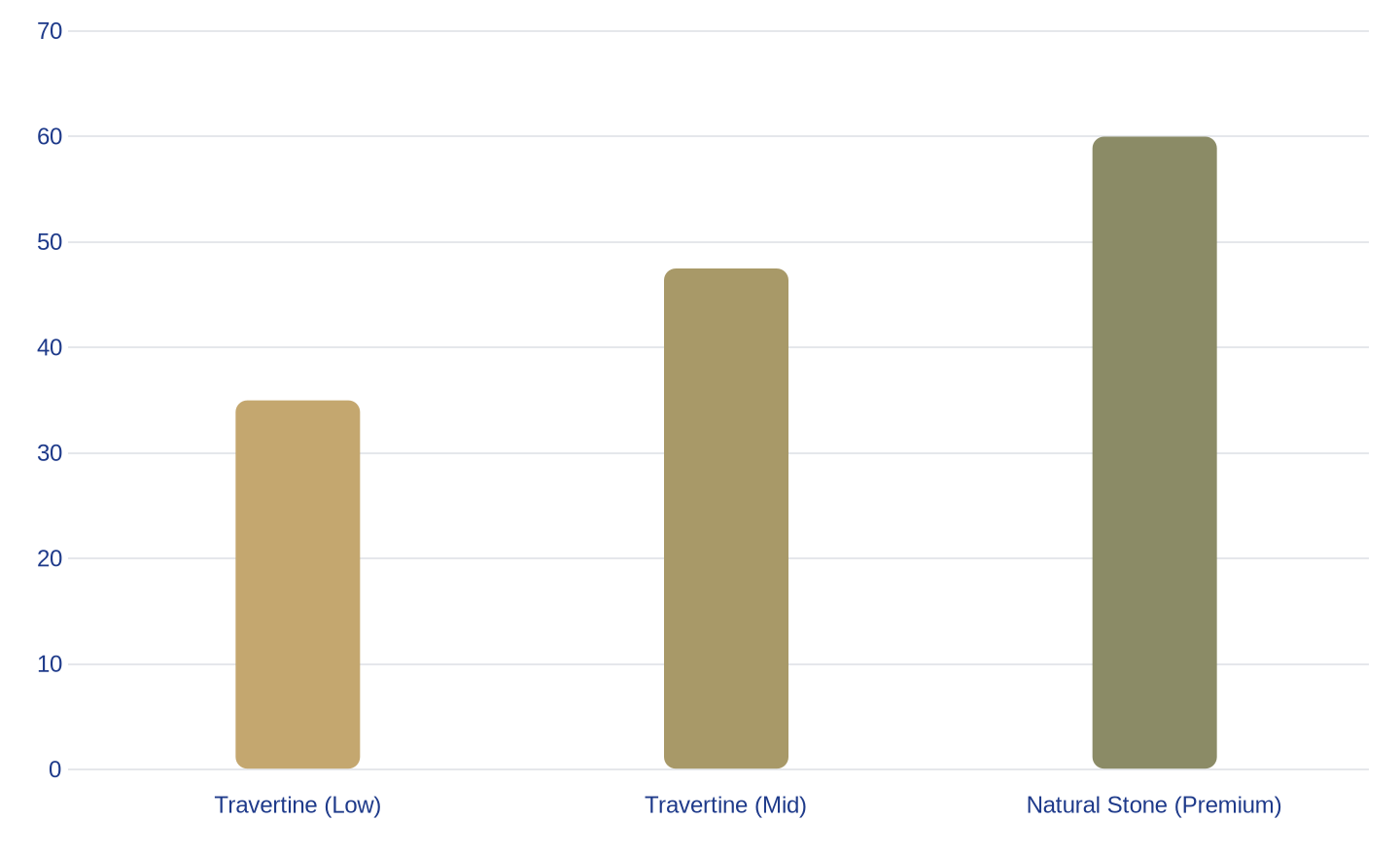
Travertine and natural stone coping range from $35–$60+ per linear foot installed. A 100-linear-foot pool perimeter costs $3,500–$6,000+ in coping alone—often replaced during resurfacing projects.
- Porcelain waterline tile is more stain-resistant than ceramic and won't absorb hard-water minerals; ideal for Florida pools.
- Travertine coping is naturally heat-resistant (important in Venice's summer sun), naturally slip-resistant when honed, and ranges $35–$50 per linear foot installed.
- Natural stone coping (granite, limestone) costs $50–$60+ per linear foot; premium option that pairs beautifully with pebble finishes.
- Replacing waterline tile and coping during resurfacing reduces labor costs vs. doing it separately; contractor already has equipment and pool access.
- Budget $3,500–$6,000 additional for a typical 100-linear-foot pool perimeter if coping replacement is included in your resurfacing project.
sidenote: Nota: Screen-enclosed pools create a microclimate with higher humidity and mineral-rich evaporation. This accelerates waterline tile staining and grout degradation. If your pool is screened, invest in porcelain tile (not ceramic) and budget for professional grout sealing every 2–3 years to prevent mildew and hard-water staining.
5. Why Florida Pools Need Resurfacing Every 7–15 Years: UV, Hard Water & Year-Round Use
Florida's near-equatorial sun breaks down plaster, quartz, and pebble finishes faster than cooler climates ever would. UV degradation is constant here—there's no winter dormancy period giving the finish a break, the way a pool in a northern state gets four to six months closed and covered each year.
Hard water compounds the problem. Calcium, magnesium, and salt deposits etch finishes over time, and because Venice pools run year-round, that mineral attack never pauses either. It's a steady, cumulative wear pattern rather than a seasonal one.
Saltwater chlorine generators add another layer of chemical stress. If your contractor doesn't manage the startup chemistry carefully after resurfacing, the salt cell can accelerate finish failure well before you'd otherwise expect to need another resurface. And even screen-enclosed pools aren't fully protected—humidity and mineral-rich evaporation inside the enclosure still etch finishes and promote mildew growth on waterline tile. If you're weighing enclosure upgrades alongside resurfacing, it's worth reading up on screen enclosure protection and how enclosure condition ties into your pool's overall maintenance picture. Rust or structural damage in the cage, as covered in our guide to pool cage rust repair, can also indirectly shorten your finish's effective lifespan by letting in more debris and UV exposure than an intact enclosure would.
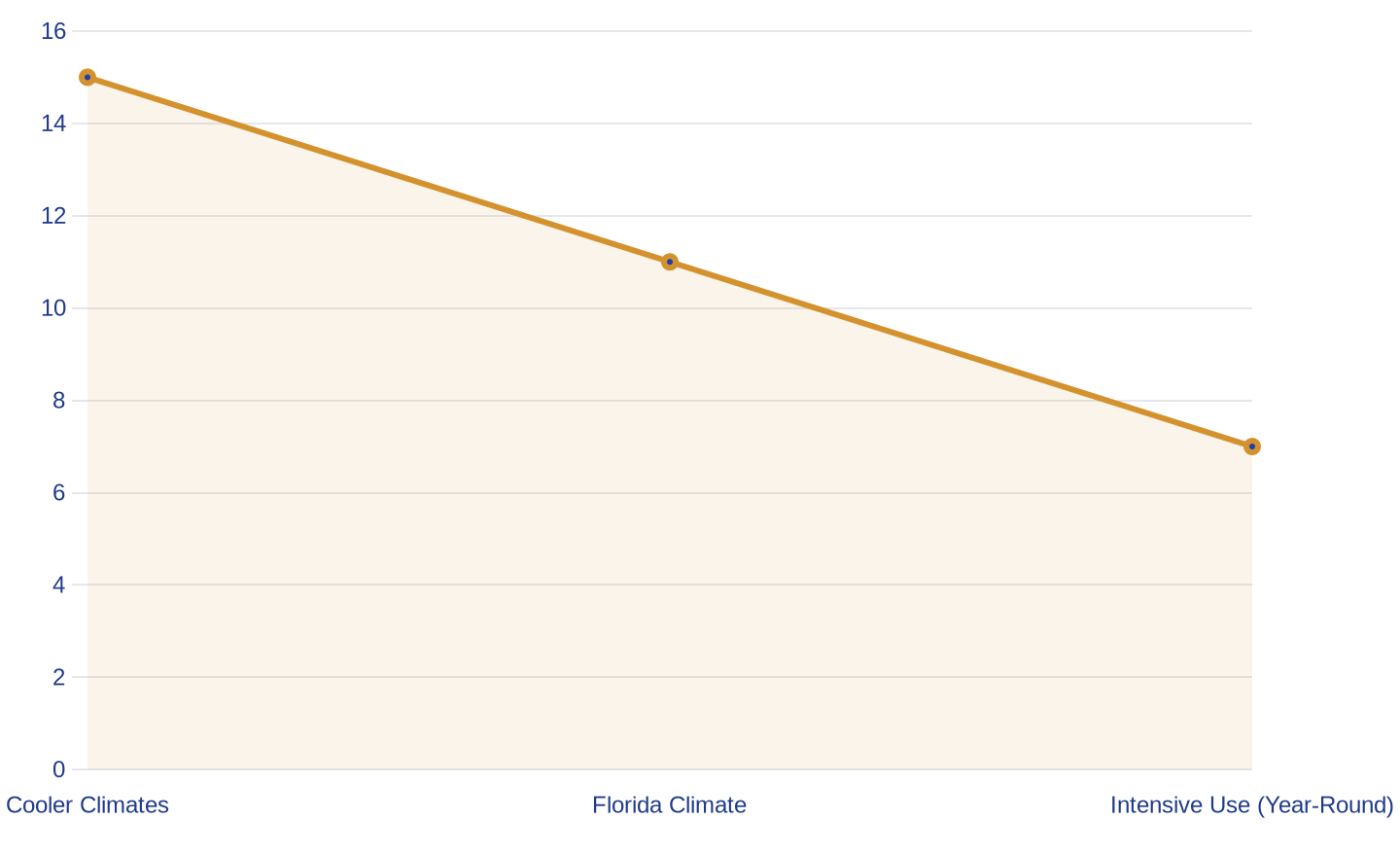
Florida's relentless UV exposure and year-round pool operation shrink resurfacing intervals by 30–50% compared to cooler climates. Venice pools face even more aggressive conditions than inland areas.
- Standard plaster in Venice typically needs resurfacing at 8–10 years, not the advertised 10–12 years, due to aggressive UV.
- Quartz finishes last 12–18 years in Florida—roughly 30% longer than plaster—because aggregate particles resist chemical etching.
- Pebble finishes extend lifespans to 15–25 years due to superior UV-stabilized resins and hard aggregate composition.
- Screen-enclosed pools experience higher humidity and mineral-laden evaporation, which can etch finishes and promote mildew growth on waterline tile.
- Saltwater chlorine generators (salt cells) intensify chemical stress on finishes; consider this when planning long-term resurfacing schedules.
sidenote: Nota: The 28-day startup chemistry period isn't just about pH and alkalinity—it's about finish curing under controlled water conditions. Jumping into heavy pool parties, large bather loads, or intense sun exposure before day 28 can cause calcium scaling, algae blooms, and surface staining. Treat the first month as a gentle break-in, not a celebration.
6. Getting Quotes & Avoiding Hidden Costs: What to Ask Your Venice Pool Resurfacing Contractor
Not all pebble is "PebbleTec," and not all quotes are built the same way. When you're comparing bids for pool resurfacing in Venice, ask specifically which brand and product line the contractor uses—PebbleTec, Pebble Sheen, Diamond Brite—because warranty terms and material quality vary between them even within the same finish category.
Scope clarity matters just as much as material brand. Confirm whether the estimate includes coping, waterline tile, and permits, or whether it covers only the interior finish. A quote that looks like a bargain on paper can balloon once you add these line items back in separately.
Make sure the quote accounts for the possibility of gunite repair if the inspection turns up cracks or thin spots—this is one of the most common sources of mid-project cost increases. Ask directly what the contractor's warranty covers: most finish manufacturers warranty 5–10 years against manufacturing defects, not general wear or chemical damage, so don't assume "warrantied" means "worry-free forever."
Get a written start date, expected duration, and completion guarantee that accounts for weather clauses—Florida rain delays are routine, not an excuse. And ask point-blank whether the contractor provides a 28-day startup chemistry protocol or leaves you to figure it out on your own. If your pool is screen-enclosed and the screen itself is due for attention, it's worth budgeting for that separately; our pool screen repair cost guide breaks down what that project typically runs in this region.
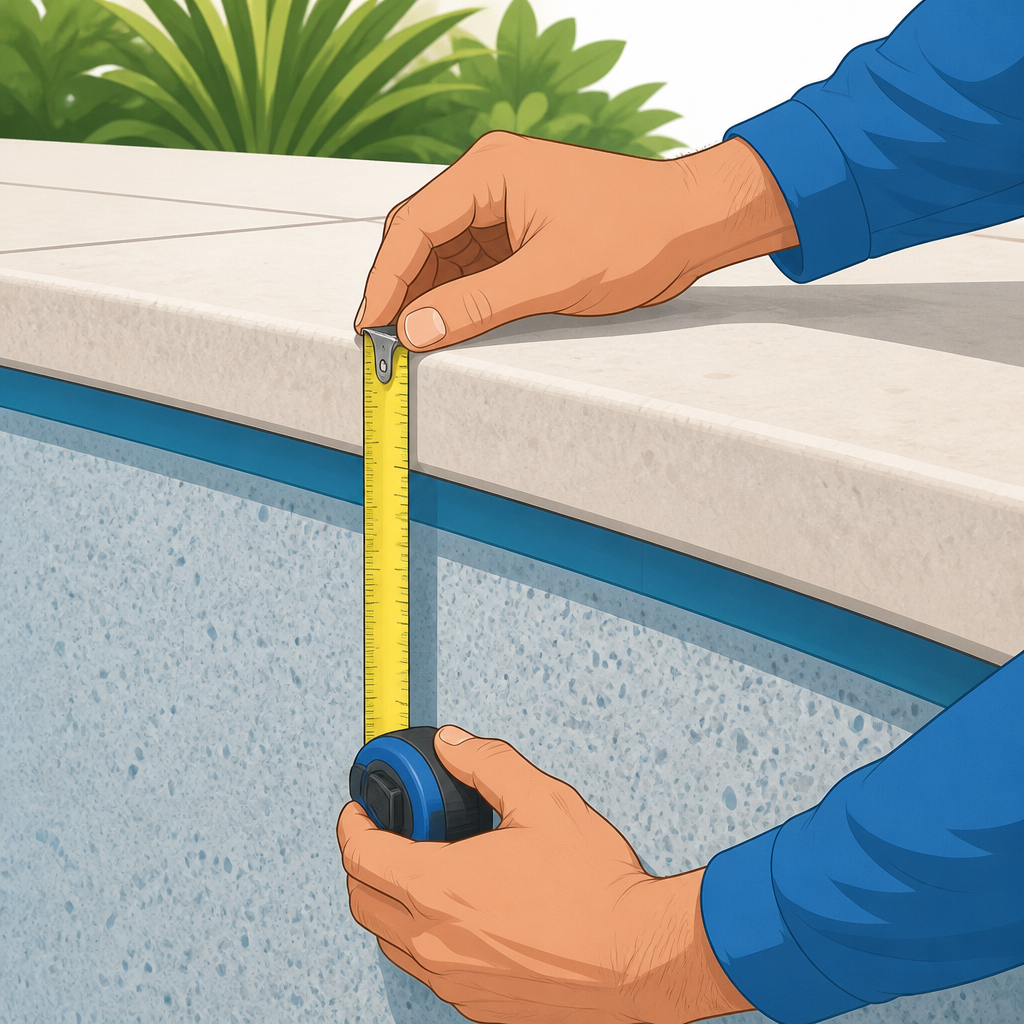
A thorough contractor estimate includes precise measurements of coping, waterline area, and gunite condition—all drivers of final cost. Always request itemized quotes before signing.
- Request itemized quotes from 2–3 contractors before deciding; price varies 15–25% based on experience and material quality.
- Ask whether the estimate includes permit fees; Venice and Sarasota require resurfacing permits ($150–$400 depending on jurisdiction).
- Clarify warranty: most finish manufacturers warranty 5–10 years against manufacturing defects, not wear or chemical damage.
- Request references from recent Venice-area projects; ask clients about timeline accuracy and 28-day startup guidance quality.
- Hidden costs: draining water disposal fees, gunite repairs, coping replacement, and tile sealing can add $1,000–$3,000 to estimates.
What This Means for Your Pool Investment
- Homeowners should expect pool resurfacing every 7–15 years in Venice—not as a surprise, but as a planned maintenance cycle. Budget accordingly, or risk facing an emergency resurfacing project that costs more due to rushing.
- The upfront cost premium for quartz or pebble finishes (45–60% more than plaster) is justified by Florida's climate; basic plaster is rarely the financially smart long-term choice despite lower entry cost.
- The 28-day startup period after resurfacing is non-negotiable. Rushing back to normal pool use risks staining, calcium scaling, and premature finish failure—essentially voiding your investment before it's properly cured.
- Waterline tile and coping should be replaced or thoroughly assessed during resurfacing, not deferred. Doing both projects simultaneously saves labor costs and ensures a cohesive, luxury appearance.
- Screen-enclosed pools face accelerated degradation due to humidity and mineral-rich evaporation; homeowners should plan resurfacing sooner and invest in protective measures like porcelain tile and professional grout sealing.
- Property managers and HOAs overseeing multiple pools in Venice should standardize on mid-range quartz or pebble finishes to reduce long-term maintenance variability and emergency resurfacing calls.
Keep Learning
- Concrete Pool Construction Near Me: Complete Sarasota-Bradenton Guide — Understand gunite pool construction basics to better evaluate what your contractor inspects during the resurfacing prep phase. Structural knowledge helps you spot repair recommendations that are legitimate vs. unnecessary upsells.
- Aluminum Pool Enclosure in Bradenton: Materials, Wind Codes & Installation Guide — If your pool is or will be screen-enclosed, learn how enclosures affect pool chemistry, humidity, and finish degradation. Enclosure design impacts resurfacing frequency and maintenance demands.
- Pool Cage Rust Repair in Lakewood Ranch: A Complete Diagnosis & Fix Guide — Screen enclosure integrity directly influences pool finish lifespan. Rust or damage in the cage structure can accelerate finish failure. Read this to understand the interconnected care strategy.
- Pool Screen Repair Cost in North Port, FL: 2026 Price Guide — Learn regional pricing and repair timelines for pool screens. A well-maintained enclosure reduces stress on interior finishes and extends resurfacing intervals.
Frequently Asked Questions
How much does pool resurfacing in Venice cost?
Pool resurfacing in Venice typically runs $6,000–$20,000 depending on finish choice. Basic plaster sits at the low end around $6,000–$8,000, while premium pebble or glass tile finishes run $18,000–$22,000 or more.
Which pool finish lasts longest in Florida's climate?
Pebble finishes last longest, typically 15–25 years, thanks to UV-stabilized resins and hard aggregate that resist both chemical etching and mineral staining. Quartz offers a middle ground at 12–18 years, while standard plaster lasts only 7–12 years under Florida's UV and hard-water conditions.
Why does my pool need 28 days before I can use it normally after resurfacing?
The 28-day startup period allows the new finish to cure properly while water chemistry stabilizes. Rushing into heavy use before this window closes risks calcium scaling, algae blooms, and surface etching that can shorten your finish's effective lifespan.
Should I replace my pool coping and waterline tile at the same time as resurfacing?
Yes, in most cases. Your contractor already has equipment and full pool access during resurfacing, so tackling coping and waterline tile at the same time reduces labor costs compared to a separate project later, and ensures a cohesive, finished look.
How long will my resurfacing project actually take?
The physical resurfacing work takes 5–10 working days, including draining, prep, acid washing, and finish application. Add a minimum of 28 days after refilling before the pool is ready for full, unrestricted use.